Why HVAC Companies Lose Leads From Missed Calls and Slow Follow-Up
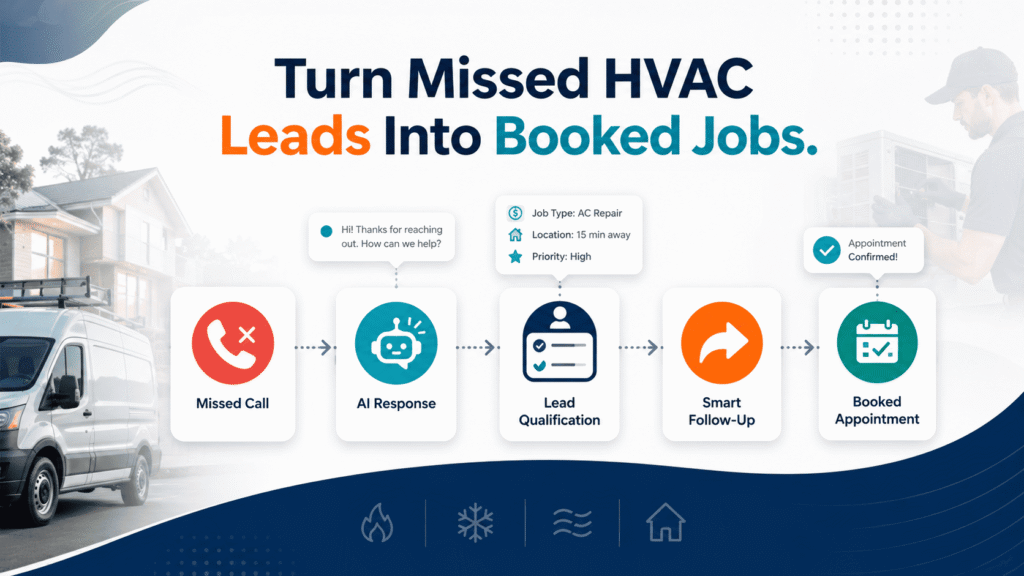
Running an HVAC company is already demanding. Your team is busy with service calls, estimates, dispatching, customer questions, and daily operations, in the middle of all that, one missed call or one delayed follow-up can quietly cost you a real job. Most HVAC companies do not lose leads because they lack skill. They lose leads because response time breaks down when the day gets busy.
That is exactly where HVAC lead conversion becomes critical.
When a homeowner reaches out, they are usually not waiting around for long. They may have a broken AC in peak summer, a furnace problem in winter, or an urgent issue that needs attention right away. If your business misses the call, replies too late, or forgets to follow up, that lead often moves on to the next contractor. The opportunity disappears before your team even gets a fair chance to speak with the prospect.
I’m MD. BORHAN, and I help HVAC companies build AI-powered lead conversion systems that turn missed calls and incoming leads into qualified conversations and booked appointments. If your business wants a more reliable way to handle HVAC lead follow-up, improve speed-to-lead, and convert more inquiries into real jobs, this article will show you where the problem starts and how to solve it.
Why HVAC companies lose good leads every day
The biggest lead problem in HVAC is not always lead generation. In many cases, the real problem is what happens after a lead comes in.
A homeowner may call during lunch, after hours, while your office is overloaded, or when your team is out in the field. If no one answers, that lead becomes fragile immediately. Even when a lead comes through a website form or ad campaign, the same problem shows up. If the prospect does not get a quick and helpful response, trust drops fast.
Many HVAC contractors assume they need more leads, but the truth is that they often need a better process for handling the leads they already have. Better HVAC lead conversion starts with improving how every inquiry is received, routed, followed up, and moved toward an appointment.
A slow response creates friction. A missed call creates uncertainty. No follow-up creates lost revenue. That is why HVAC missed calls are much more expensive than they seem.
The real cost of missed calls in an HVAC business
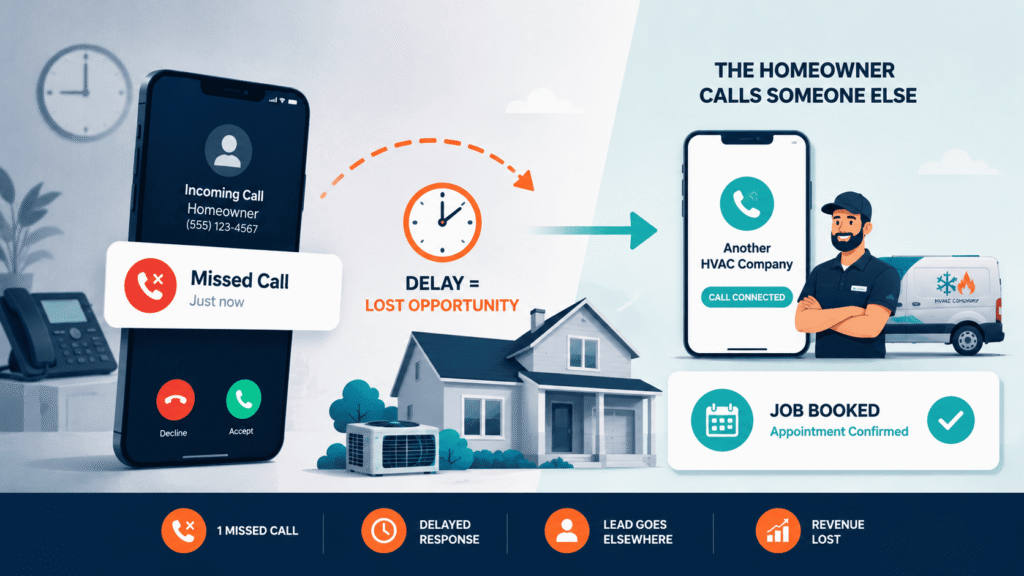
Every missed call has a direct and indirect cost.
The direct cost is simple. You may lose an estimate, service call, maintenance agreement, or installation opportunity. The indirect cost is even larger. Your team spends money on marketing, SEO, paid ads, trucks, staff, and office systems to bring in demand. If incoming inquiries are not handled quickly, that investment does not produce the return it should.
For HVAC companies, speed matters because urgency is part of the buying behavior. A customer with no cooling in July or no heat in January is not likely to wait until tomorrow for a reply. They want confidence now. They want to know someone has seen their message, understands the issue, and can guide them to the next step.
That is why HVAC lead conversion is not just a sales issue. It is also a customer experience issue. Better follow-up creates a better first impression, and that first impression often decides who gets the job.
What strong HVAC lead conversion actually looks like
Good HVAC lead conversion does not mean sending robotic replies or overwhelming leads with automated messages. It means building a clear, consistent, human-centered process that works even when your team is busy.
A strong system usually follows a simple path.
A new lead comes in by phone, form, or ad.
The system responds quickly.
The lead is qualified with the right basic information.
The prospect receives timely follow-up if they do not take the next step immediately.
Your team gets a clearer handoff so they can focus on closing and serving.
This kind of process helps HVAC companies reduce lead leakage and improve booked appointments without creating more administrative chaos. If you want to understand the framework behind this process, visit the How It Works page.
Why fast follow-up changes conversion rates
Speed-to-lead has a powerful impact on results. The faster a lead hears back from your business, the better the chance of keeping their attention and moving them toward a call, quote, or booking.
But fast follow-up is not only about speed. It is also about relevance and clarity.
A useful first response should make the homeowner feel acknowledged. It should confirm that their inquiry has been received, create confidence that someone will help them, and guide them toward the next action. That is where AI lead conversion for HVAC companies becomes practical. It helps create immediate and consistent contact while your team handles real work.
For example, if someone fills out a form after business hours, they should not feel ignored until the next morning. If someone calls and no one picks up, there should still be a reliable way to continue the conversation. When your process is designed well, your business stays responsive even when people are unavailable.
That is one of the main goals behind my Services for HVAC companies. I help businesses reduce missed opportunities by building systems that keep lead follow-up moving.
How AI helps HVAC companies convert more leads
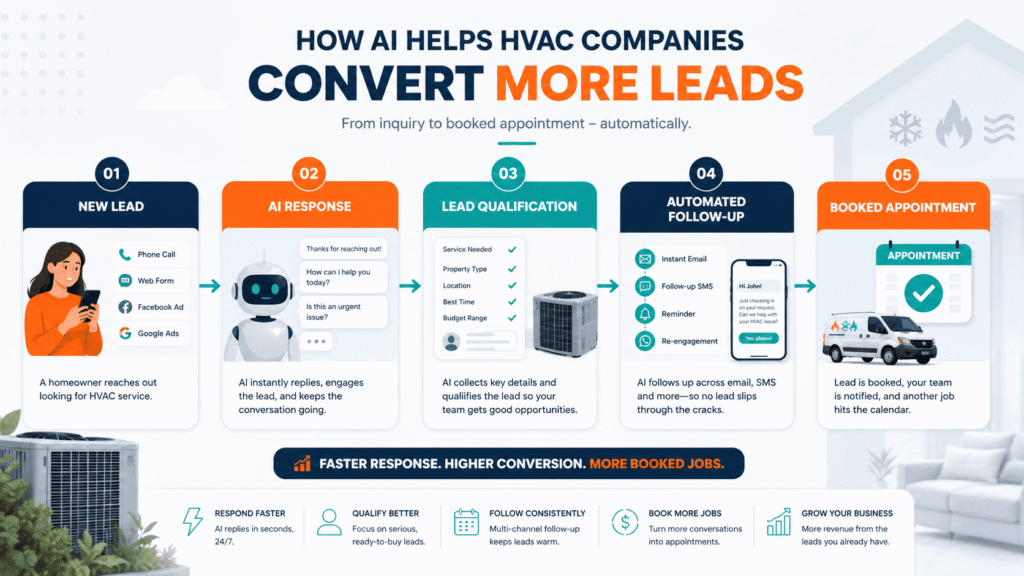
There is a lot of noise around AI, but the real value is not hype. The real value is consistency.
AI automation can help HVAC companies respond faster, qualify leads more smoothly, and follow up more reliably. It does not replace your team. It supports your team by handling repetitive communication steps more efficiently.
For example, an AI-supported workflow can:
- acknowledge a new inquiry quickly
- continue the conversation after a missed call
- collect key lead details
- maintain follow-up when a prospect goes quiet
- route qualified opportunities toward the right next step
This helps your office staff spend less time chasing scattered inquiries and more time handling real customer conversations. It also helps business owners create a cleaner sales pipeline.
If you want to see a real example of how that can look in practice, check the Demo page.
The difference between more leads and better lead handling
Many contractors focus heavily on getting more traffic, more calls, and more form submissions. Growth matters, but more leads do not automatically create more revenue.
If your business already receives inquiries but loses them because of missed calls, delayed responses, or inconsistent follow-up, then the bottleneck is conversion, not volume.
That is why HVAC lead conversion deserves more attention. A business that follows up well can often improve results before spending more money on ads. When you reduce lead loss, you create more value from the demand you already have.
In practical terms, better lead handling means:
- fewer missed opportunities
- faster response times
- better lead qualification
- more structured follow-up
- more booked jobs from existing demand
This is one of the most cost-effective ways to improve performance for an HVAC company.
Why human-centered automation works better
Some business owners worry that automation will make their company feel cold or impersonal. That concern is understandable, but the issue is not automation itself. The issue is how it is designed.
Good automation should support human communication, not replace it with awkward messaging. It should help your business stay responsive, helpful, and professional. It should create smoother handoffs, not more confusion.
That is the approach I take as MD BORHAN. My work is focused on practical AI automation and lead conversion systems for HVAC companies. The goal is not to make your business sound artificial. The goal is to help your business respond faster, qualify better, and stay consistent without losing the human touch.
If you want to know more about my background and approach, you can visit the About page.
Signs your HVAC company needs a better lead conversion system
Not every company notices the problem right away. Often, owners sense that leads are slipping through the cracks, but they cannot always see exactly where it is happening.
Here are some common signs.
Your team misses calls during busy hours.
Leads come in from forms or ads, but response times vary too much.
Follow-up depends too heavily on memory or manual effort.
Some prospects disappear before speaking with your team.
Your office staff spends too much time repeating the same communication steps.
You believe your marketing should be producing more booked jobs than it currently is.
If any of those sound familiar, your business may not need more complexity. It may need a cleaner HVAC lead conversion process.
What an effective HVAC lead conversion system should include
A practical system should be simple, reliable, and easy for your team to use. It should not depend on perfect conditions. It should work when the office is busy, when calls come after hours, and when multiple inquiries arrive at once.
A strong setup typically includes:
clear lead intake from phone, forms, and campaigns
fast first-touch communication
basic lead qualification
structured follow-up for unresponsive prospects
clean routing toward your team
visible next steps for appointment booking
The best systems are not only technically sound. They are also aligned with the way your team already works. That is why I focus on building solutions around real operations instead of forcing businesses into bloated, hard-to-manage tools.
If you are exploring ideas, you can also browse more insights on the Blog page.
Why this matters for brand trust and long-term growth
Homeowners do not just choose the best technician. They often choose the company that feels most responsive and easiest to work with from the very first interaction.
That first interaction shapes trust.
When your business responds quickly, asks the right questions, and follows up consistently, prospects feel more confident. That confidence increases the likelihood of a booked call, a scheduled estimate, and eventually a loyal customer relationship.
Over time, stronger HVAC lead conversion supports stronger business growth. It improves the return on marketing. It helps your team stay focused. It creates a smoother buying experience. And it helps your company stand out in a competitive local market.
Final thoughts
HVAC companies lose revenue every day not because demand is missing, but because lead handling breaks down between the first contact and the booked appointment. Missed calls, delayed responses, and inconsistent follow-up quietly reduce the results of all your marketing efforts.
The good news is that this problem is fixable.
With the right HVAC lead conversion system, your business can respond faster, qualify leads more effectively, and create a more consistent path from inquiry to booked job. That is where AI automation becomes valuable. Not as a gimmick, but as a practical tool that helps your business operate better.
I’m MD. BORHAN, and I help HVAC companies build lead conversion systems that turn missed calls and incoming inquiries into real business opportunities. If you want a smarter way to improve follow-up, reduce lost leads, and book more jobs, start by requesting your free audit.
Visit the Contact / Free Lead Audit page to get started.